
Harold Isaacs Lives
Harold Isaacs was the lone survivor of a small plane crash in the lowland jungle southeast of Cusco, Peru when he was just a boy of thirteen. The two other passengers were his uncle Jack, who died on impact, and the pilot, who lived two more days pinned in the twisted metal of the cockpit. For his part, while bruised and cut across the forehead, Harold crawled from the wreckage largely unhurt. He’d learned enough during his time with Jack that someone would come looking and he would do best to stay put and wait it out. The pilot, whose name Harold had long since forgotten, spoke in hushed words and groans when he was lucid, but Harold knew no Spanish and could only make out repeated requests for agua, which the boy couldn’t accommodate. Harold was set to go back to his mother in the States the very next week, though he often remembers thinking that there was a real chance he’d never see her again.
Harold’s mother was Belinda, Jack’s younger sister. Between the two of them there were more than enough marriages to go around, though Jack contributed none of them. He preferred working to just about anything else that came his way, including marriage and fatherhood. He’d found his way out of the Kentucky coal mines and into a management position with a gold mining outfit in South America. He was good with numbers and people and that was enough. Belinda, on the other hand, collected husbands the way other women collected grievances. By the time Harold started kindergarten she was on her fourth, a man named Vince who held the title longer than anyone before or after him.
Vince owned a refuse company in Fort Lauderdale and was the closest thing Harold ever had to a father. He never took much interest in the kid, but he was kind-spoken and handed out twenty-dollar bills anytime Harold had an idea that would take him out of the house. It would be years before Harold realized the man simply wanted him out of the way, which was probably best for both of them. Vince just stopped coming home one day. Nobody ever saw or heard from him again, including Belinda, who spent a week in bed sobbing before being visited by two men in nice suits. Harold remembered that one of the men winked at him and that the scent of their cologne stayed in the house long after they left. Whatever business they had with Belinda, it seemed to improve her outlook in a hurry.
Jack always had a fondness for his only nephew and he knew his sister well enough to know that either he would take the boy for the summer or Harold would be left to his own devices. Plus, he figured, time away from whatever play Belinda was running couldn’t hurt and hard work might give the kid grit and character, and if there was one thing Jack was certain of, it was that in 1966 the world needed more men with grit and character.
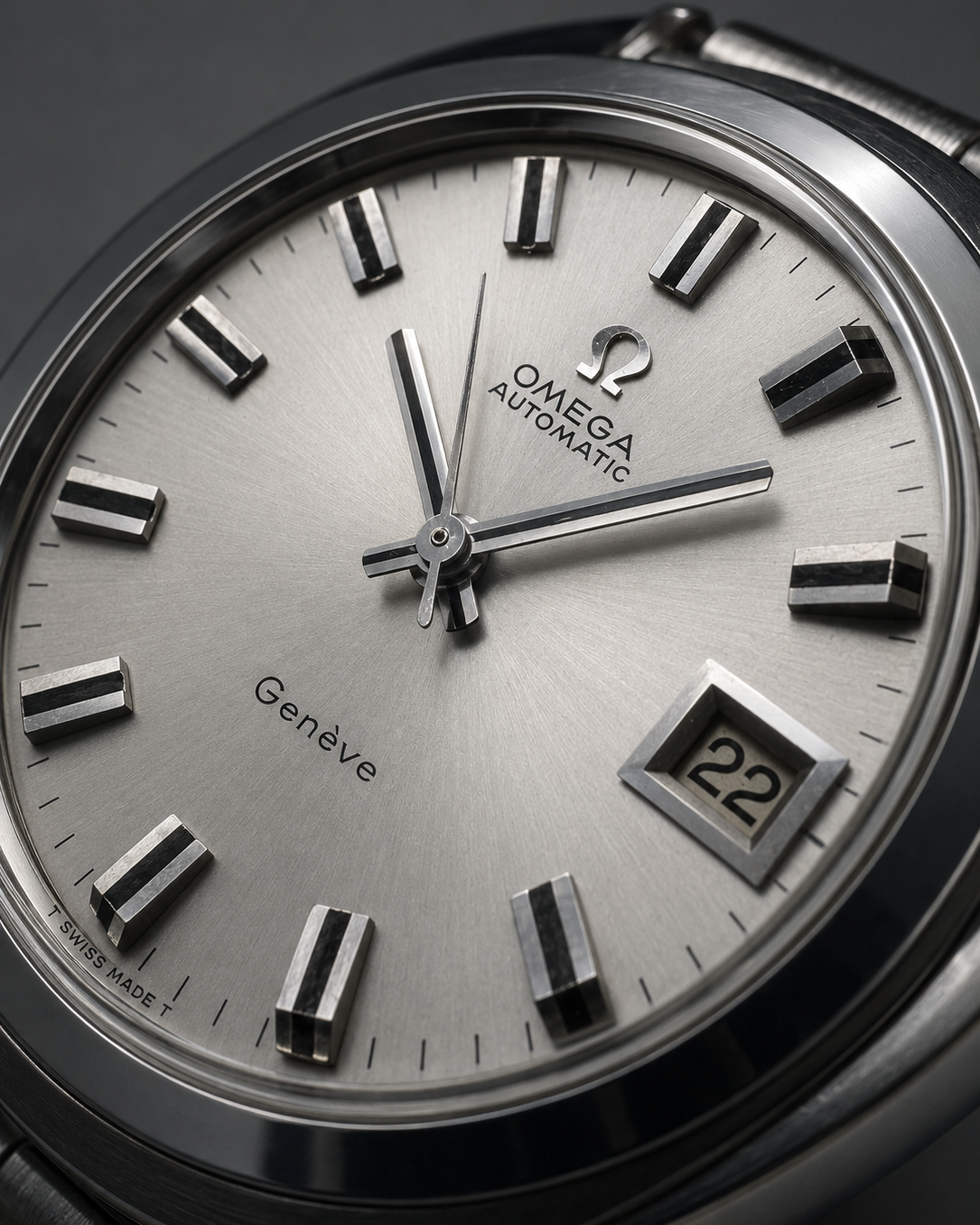
The Cessna had come to rest on its right side, the nose buried in a thicket of vines and greenery at the base of a Shihuahuaco tree that rose some two hundred feet from the jungle floor. The impact had lifted the front end of the plane so that it looked as though the tree had snatched it up and was trying to consume it from front to back. A thick branch had pierced the windshield and Harold guessed that was what killed his uncle. It shielded the top half of Jack’s body and Harold could only see his legs, still resting on the floorboard. The pilot was strapped into his seat, the instrument panel pinning him in place. The angle of the nose left his right arm dangling and Harold could see he was wearing a silver watch. Harold had never met anyone who wore a watch on his right wrist, but this man did. It had a white dial with silver indices and a bracelet made of small linked beads that reminded Harold of the scales of a snake.

On the third morning Harold woke to silence. The pilot had stopped breathing sometime in the night. Harold sat with him for a while, though he couldn’t have said why. The jungle was loud around him, birds and insects and things moving in the canopy, but inside the cockpit it was still. He reached over and unclasped the watch from the man’s wrist and put it on his own. It was too large and slid halfway to his elbow, but the weight of it felt like something. Like a thing that proved he’d been there.
He’d noticed a river not far from the wreckage on the day of the crash. Jack had taught him that much. You find water, you follow it downhill, and eventually it takes you somewhere. So Harold climbed out of the Cessna for the last time and walked toward the sound of it and when he found it he started walking. He didn’t look back at the plane. He didn’t say anything to Jack or to the pilot. He just walked.
It took him two days. A group of miners found him sitting on a rock at the water’s edge, skinny and sunburned and bitten half to death by things he couldn’t name. They fed him boiled rice and yuca and someone drove him to Puerto Maldonado in a truck with no windshield. From there a series of officials and phone calls and short flights carried him back to Fort Lauderdale, where for about two weeks he was the most famous boy in Florida.
He was in every newspaper and on every television screen. Reporters came to the house and Belinda let them in and made coffee and told them she’d always known Harold was special. She told one of them, on camera, that Harold needed a father and that maybe all this attention might bring the right man along. She smiled when she said it, and the reporter smiled too, and Harold watched from the hallway. She did meet a man. Then another. None of them were Harold’s father, whom he’d never met, and none of them were Vince, and none of them lasted. Harold stopped counting after a while. The attention dried up. The reporters moved on to other boys who’d survived other things. Walter Cronkite himself had said Harold’s name once, on the evening news, and that was something Harold carried with him for reasons he couldn’t fully explain, though the carrying got lighter every year. School started again in September and Harold went back to being Harold, which is to say, nobody in particular.
He never got on another airplane. It wasn’t fear exactly. Harold didn’t think of himself as afraid of flying any more than he was afraid of anything else. It was more that flying had become irrelevant to him, the way a language you once spoke becomes irrelevant if you never visit the country again. The flight home from South America had been the last in a series of events that happened to Harold without his permission, and when the wheels touched down in Miami he simply stopped thinking about airplanes the way you stop thinking about someone you’ll never see again. If he went somewhere, he’d drive. And if he couldn’t drive there, he didn’t need to go.
He lived with that for five more years, finishing out high school in Fort Lauderdale as the kid who’d survived the crash, though by junior year even that had faded into the background. He worked afternoons and weekends at Dick’s Fill-n-Fix, a gas station and mechanic’s garage on Federal Highway, pumping gas and changing oil and sweeping the bays. The owner, Dick Perillo, paid him in cash every Friday and never once asked about Peru. Harold liked that about him. By the time he graduated he’d saved enough to buy a Chevy Cutlass off the lot at a dealership on Sunrise Boulevard. He packed what he owned into the back seat and drove north without telling Belinda where he was going, mostly because he didn’t know.
This single principle, the refusal to fly, shaped the rest of his life in ways Harold never fully considered. He didn’t go to college because the schools that accepted him were too far. He didn’t take the job in Seattle that a friend of Belinda’s had arranged because Seattle was on the other side of the country and Harold wasn’t interested in finding out how many days that drive would take. He ended up in Dayton, Ohio because a man he’d met at a gas station outside Indianapolis told him the city was hiring meter readers for the water department and the pay was decent and nobody would bother you. That turned out to be true on all counts.
Harold started with the Dayton Department of Water Management in the spring of 1975 and he was still there fifty years later. He read meters for the first nineteen years, walking the same routes in the same neighborhoods until he knew every house, every dog, every garden hose left running in August. He was promoted to supervisor of meter readers in 1994, which meant he traded walking for sitting and fresh air for fluorescent light, and if that was progress then Harold supposed he’d made some. He never missed a day. Not one. He came in with fevers and drove through snowstorms and once passed a kidney stone in excruciating pain on a Saturday and was back at his desk on Monday morning as though nothing had happened. His supervisors admired this. His coworkers found it strange. Harold didn’t think about it one way or the other. He went to work because that was what the day was for, and when the day was over he went home.
Home was a one-bedroom apartment in Kettering, a suburb of Dayton that was exactly as interesting as it sounds. Harold had lived there since 1983. The carpet was beige. The walls were white. There was a television and a recliner and a kitchen table with two chairs, though no one ever sat in the second one. He ate breakfast at a diner called The Pony on Tuesdays and Thursdays because they had a two-egg special for $4.99 and the waitress, Deb, never asked him how he was doing in a way that required an answer. He went to bed at nine-thirty and in the morning he wound the watch.
There had been women. Harold wasn’t incapable of that. A woman named Gail in the early eighties who taught second grade and wanted to get married and have children, both of which struck Harold as elaborate problems he had no interest in solving. A woman named Patricia who worked at the DMV and came over on Friday nights for about three years until she stopped, and Harold couldn’t say exactly when that was or what had changed. A woman named Sandra who told him once, after they’d been seeing each other for six months, that being with Harold was like sitting in a waiting room. He wasn’t unkind. He was just absent, even when he was there. Sandra was right and Harold knew it and he let her go the way he let all of them go, which is to say he didn’t hold on.
He’d watched Belinda cycle through enough husbands to know that the institution was not to be trusted. Marriage, in Harold’s experience, was something that happened to people and then unhappened, and the space in between was mostly logistics. He’d never met his own father. Vince had disappeared into whatever arrangement had brought those two men to the door. Jack had loved work more than people and died in the jungle for it. The lesson Harold took from all of this was not bitterness but something quieter: a suspicion that attachment was a current you could choose not to step into, and if you stayed on the bank and watched it pass, you might not get anywhere, but you wouldn’t drown either.
Belinda died in 2004. Harold drove to Fort Lauderdale for the funeral and sat in the back of a church he’d never been to and listened to a minister who’d never met her say kind things. There were two ex-husbands in attendance and a man Harold didn’t recognize who cried harder than anyone. Harold went through her apartment afterward and found nothing he wanted to keep. There were no photographs of Jack and only one of Harold, a newspaper clipping from 1966 that she’d framed and hung in the hallway next to a mirror. In the photo Harold looked stunned and small. He left it on the wall.
The watch had been on his wrist every day since Peru. Sixty years. He’d had it serviced when it needed servicing and the crystal replaced twice, but the bracelet was original, the same small linked beads that had reminded a thirteen-year-old boy of snakeskin. The links had worn smooth over the decades, polished by shirt cuffs and doorknobs and sink faucets and the ordinary friction of a life lived mostly indoors. Harold cared for the watch in a way he’d never cared for much of anything else. He couldn’t explain why, not really, not in any way that would satisfy someone who asked. It wasn’t sentiment and it wasn’t superstition. It was more that the watch was the one object in his life that had been with him through all of it, and it still worked, and that seemed to matter. It ran about two minutes fast per day, which Harold corrected each morning by pulling the crown and setting it against the clock on the microwave. He’d never had it appraised. He didn’t know what it was worth and didn’t care to find out.
Sometimes he’d hold it up and look at it, really look at it, and he could still see the pilot’s arm hanging at that angle and the way the light came through the shattered cockpit and caught the dial. He didn’t think about Peru often, but when he did, it came back as a series of still images rather than a story. The legs on the floorboard. The sound of the river. The feeling of the clasp releasing from a dead man’s wrist. The rice and yuca. His mother on television, smiling.
He’d never told anyone what the watch really was. People saw it and said nice watch and Harold said thank you and that was the end of it. He supposed if he were a different kind of man he’d have done something with the story. Written a book. Gone on a talk show. Become a motivational speaker or one of those people who survived something and built their whole life around it. But Harold was not that kind of man. He’d survived, and then he’d gone on living, and the living had been quiet and plain and mostly beside the point.
The letter came on a Monday. New leadership at the top. A reorganization. The Department of Water Management was consolidating supervisory roles and Harold’s position had been eliminated. They thanked him for his service. They used the word “legacy.” Harold read it twice, folded it, and put it in his jacket pocket. He’d known it was coming. There had been meetings he wasn’t invited to and younger people walking through the building with clipboards and the particular energy of people who have been hired to make decisions about other people’s lives.
They told him there would be a party. Harold said that wasn’t necessary. They said it was, actually, that it had already been approved and the date was set and someone from the city manager’s office would be there. The mayor might even stop by. Harold understood then that the party was not for him. It was for them. It was so they could say they’d done the right thing by a man who’d given fifty years to a job that most people couldn’t do for five.
The party was held at the VFW hall on a Friday evening. Someone had hung a banner that said “Happy Retirement Harold!” with an exclamation point that felt aggressive. There were cookies from a grocery store and a bowl of punch and a sheet cake with his name on it, and Harold thought about the fact that this was the second time in his life a room full of strangers had gathered on his account. The first time he’d been thirteen and sunburned and famous. This time he was seventy-three and redundant. The mayor never showed.
They gave him the check first. His supervisor, a woman named Karen who’d been in the role for four years and still called him “Mr. Isaacs,” handed him an envelope and explained that it represented his accumulated paid time off. Fifty years of vacation days, personal days, sick days, none of them taken, all of them converted to their current dollar value. Harold opened the envelope and looked at the number. It was the largest check he’d ever seen. It was the cash value of every trip he didn’t take, every week at the beach he didn’t sit through, every Christmas morning he spent reading meters because someone had to and Harold was the one who never said no. He folded it and put it in his jacket pocket next to the letter.
Then a man from the city manager’s office stepped forward. He was young, maybe thirty-five, and he wore a suit that fit him well and he spoke in the way that people speak when they are narrating a moment they believe is significant. He talked about Harold’s record. Fifty years. Never missed a day. An example to the department. An example to the city. A man of rare dedication. Harold stood and listened and tried to look the way a person is supposed to look when other people are saying kind things about him. Then the young man produced a box. It was green and rectangular, hinged at the back, and Harold knew what it was before it was opened.
It was a Rolex. Brand new. Silver with a blue dial. The young man explained that in the history of the Dayton Department of Water Management, no retiree had ever been presented with a gift of this caliber, but Harold’s record was without precedent and the department felt it was the right thing to do. People clapped. Someone whistled. Karen wiped her eyes. The young man removed the watch from the box and held it out and Harold extended his left wrist and let the man clasp it on. It was heavy and bright and it sat on his arm like a piece of jewelry from someone else’s life. Karen smiled and winked at him, and for a moment Harold was back in Fort Lauderdale, standing in the hallway while a man in a nice suit winked at a boy whose world was about to change for reasons he wouldn’t understand for years. Harold thanked everyone. He ate a piece of cake. He shook hands. He let Karen hug him.
Outside the rain had started, a light steady mist that dotted the windshield of his car. Harold sat in the driver’s seat with the engine idling and the wipers on. The parking lot was emptying around him. Headlights swept across the interior of the car as people pulled out and drove home to their lives. Harold looked down at his left wrist. The Rolex caught the passing light and threw it across the dashboard. He turned his wrist slowly, watching the way the dial moved in and out of shadow. It was a beautiful watch. He could admit that. He held it there for a long moment, studying it the way you study something you’ve been given that you know you’ll never wear.
Then he unclasped it. He’d put the Omega in the green Rolex box for safekeeping before the party, tucked into the soft cushion where the new watch had been. He reached over to the passenger seat and opened the box and there it was, the yellowed dial and the silver indices and the beaded bracelet worn smooth from sixty years of living. It looked familiar and good and right. He pulled it from the box and clasped it onto his right wrist. Then he placed the Rolex in the box where, Harold thought, it belonged. He closed the lid and set it on the passenger seat.
The wipers moved back and forth. The last of the headlights pulled out of the lot. Harold put the car in gear and drove home to Kettering.
In the apartment he hung his jacket on the hook by the door and put the green box in the top drawer of his dresser and closed it. He sat down in his recliner. The apartment was quiet. The television was off. He pulled the crown on the Omega and set it against the clock on the microwave. Two minutes fast, as always.
Harold thought about the check in his jacket pocket. He thought about Fort Lauderdale, which he hadn’t visited since Belinda’s funeral. He thought about Peru, which he hadn’t visited since the jungle and the river and the rock where the miners found him. He thought about airplanes. He thought about the pilot, whose name he couldn’t remember, who had worn his watch on the wrong wrist and died on the third morning.
He wound the Omega. It still worked. It fit him just fine.
Story Watch
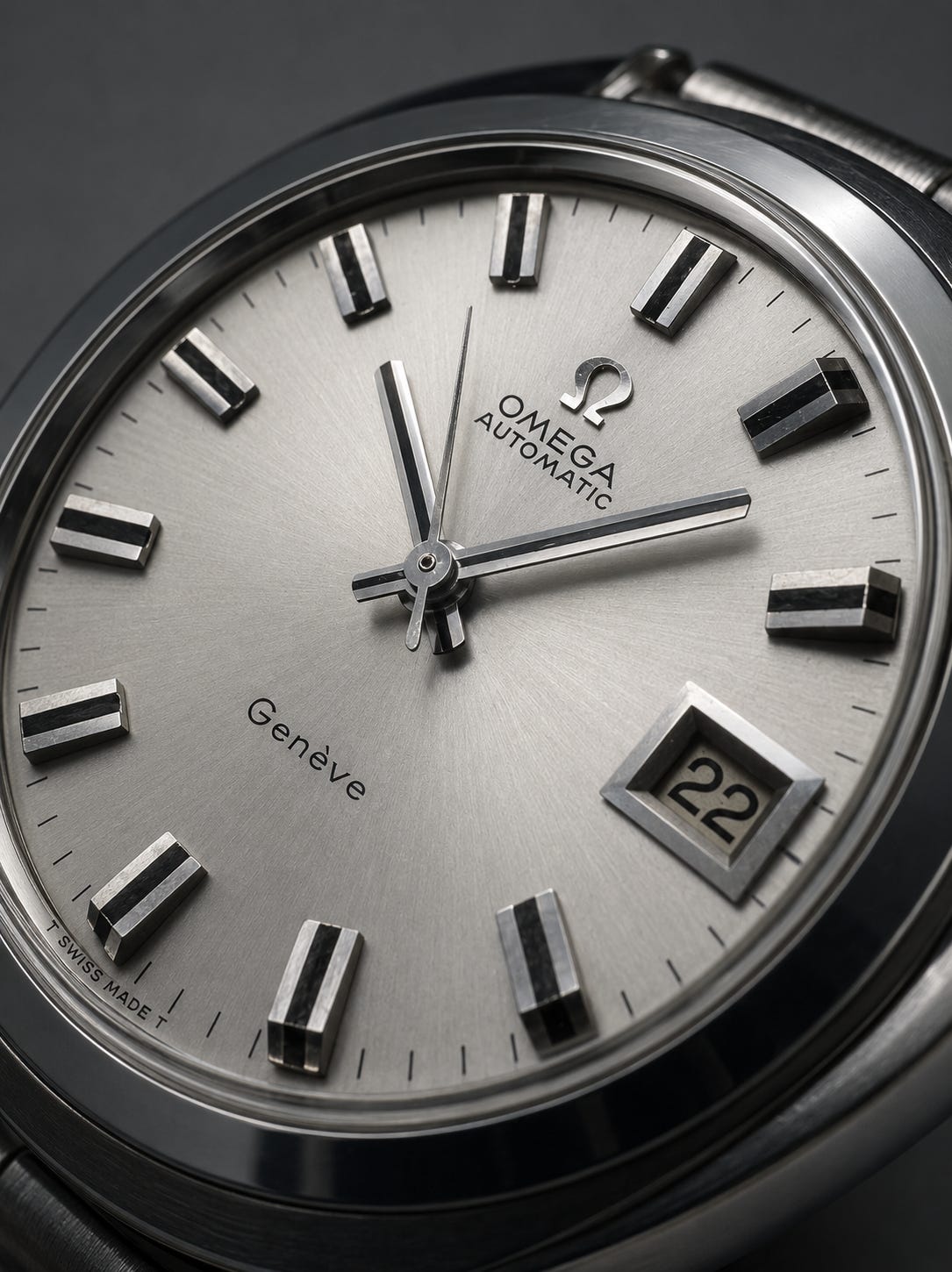
Omega Genève Automatic
Circa 1970
The watch that inspired Harold Isaacs Lives.
A silver dial. Applied indices. A beads-of-rice bracelet worn smooth by decades of use.
Every scratch arrived honestly.
The rest is fiction.

Leave a comment
This site is protected by hCaptcha and the hCaptcha Privacy Policy and Terms of Service apply.