
Dedicated Service
A few weeks after I was fired a package arrived in the mail. It was my one-year anniversary gift. There was a card inside and a branded keychain. The card read Thank you for your One Year of Dedicated Service.
It was signed by the CEO. It was also signed by the head of HR, who had died three months back. She smoked. Nobody was surprised. When they lifted her head from the desk a few paperclips stuck to her face.
I stood in the kitchen looking at the card. I didn’t take the keychain out of its carrier.
My wife came in. I slid the package across the counter and she stopped it.
“Look what came for me,” I said.
She looked at it. The corner of her mouth went up.
“Isn’t this lady dead?” she said.
“She sure is,” I said.
She tossed it back on the counter and shook her head.
“At least they know our address for your severance check,” she said.
It was Thursday. She was going to Ann’s for mahjong and prosecco. She wouldn’t be late, and I’d be in bed before she got home.
“There’s food in the fridge.” She swung the door open, looked, shut it. “I mean it. Don’t order takeout. We have to be careful now.”
Then she was gone and the house was quiet.
The doorbell rang a little after seven. A man stood on the step with a cooler on wheels. He was younger than me, in a polo shirt, and he looked like he’d been on his feet all day.
“Evening,” he said. “What’s for dinner?”
“Leftovers,” I said.
“Can I show you something? Won’t take ten minutes. Won’t cost you a thing.”
I let him in. I don’t know why. The house was quiet and he was already pulling the cooler over the threshold.
He set up on the counter. He had a machine, a clear bowl with a crank on the side and blades inside it. He talked the whole time and I couldn’t get a word in. He dropped in lettuce, a wedge of cabbage, a head of radicchio. He turned the crank. The radicchio came out the other side in thin purple strips. He kept going — carrots, a beet, the skin coming off in one curl. He worked fast. I watched his hands.
When he was done there was a bowl of salad on my counter that looked like something from a magazine.
“That,” he said, “took ninety seconds.”
It was a good salad. It turned out the salad was not the point. The machine was the point, and it was two hundred dollars, and he had three payment plans. I told him I’d just lost my job. He nodded like he heard that a lot.
“Last house of the night,” he said. He looked at the salad.
“You want a beer?” I said.
He sat down. I got the leftovers out and we split them and ate the salad with two forks out of the bowl. I opened beers and then I opened more.
He covered a lot of ground, he said. Four counties. He named the towns. He said the trick was the last hour of daylight, when people were home and tired and the porch lights came on. He said a man alone was the best house on the street. A man alone would let you in.
“No offense,” he said.
“None taken,” I said.
He asked what I’d done. I told him. I told him about the card with the dead woman’s name on it, the keychain I hadn’t taken out of the box. He laughed, the first real laugh, and it felt good to make a stranger laugh. I told him they’d sent the unemployment paperwork for the wrong state. A state I’d never lived in. He shook his head like that was the saddest part, and maybe it was.
“They don’t sweat anything,” he said. “Place like that. You watch. Whole thing comes apart.”
I didn’t tell him about my wife. I started to. I said the house was usually — and then I let it go and drank instead. He didn’t push. He was a man who knew when a sale was done.
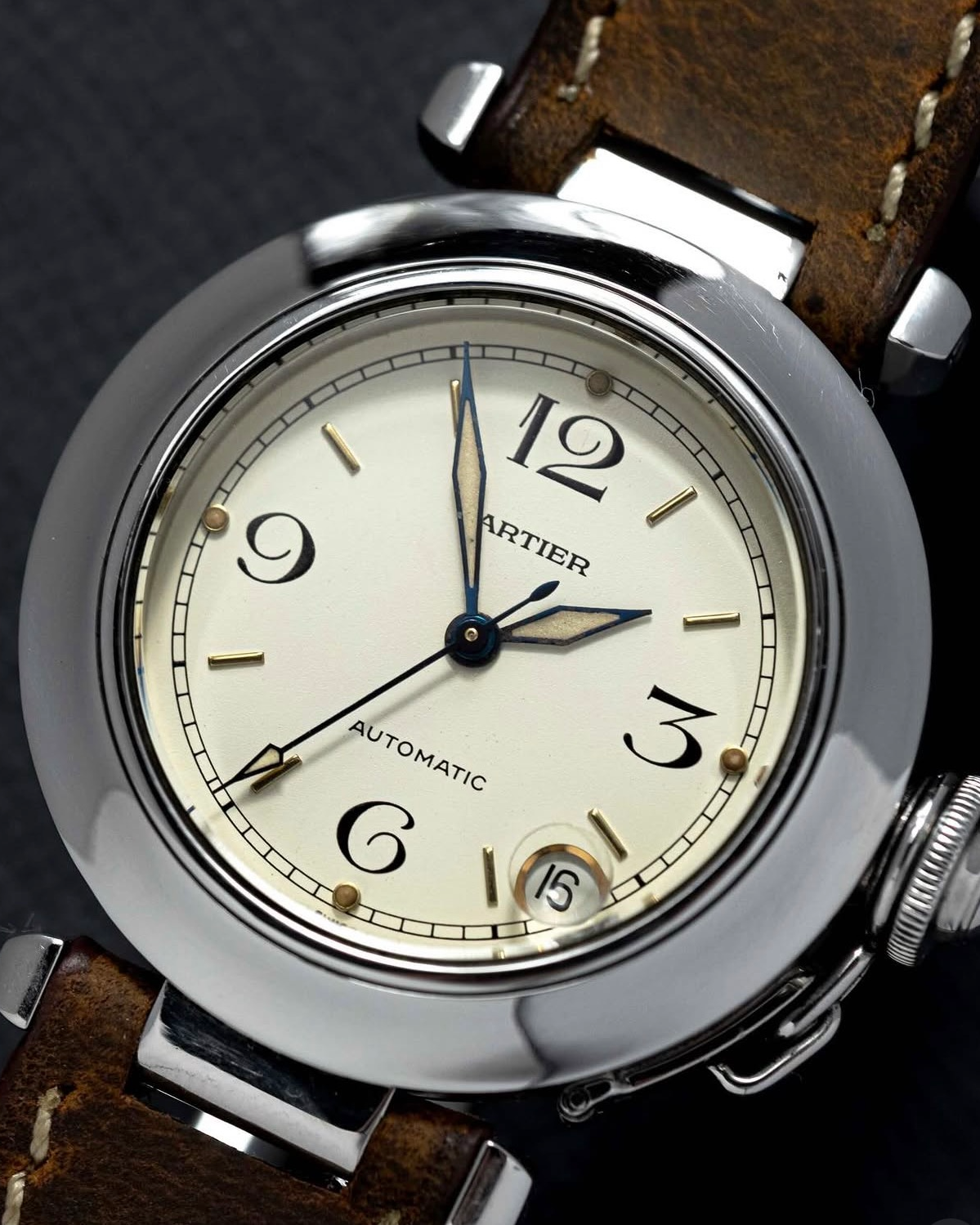
That was when I saw the watch. He’d pushed his sleeve up to reach across for the bottle and there it was on his wrist. Round, a white face, the numbers in that old Roman style, two thin blued hands. There was a little cap on a chain over the winder, like a porthole on a ship. I’d never seen anything like it. I couldn’t stop looking at it.
“That’s a hell of a watch,” I said.
“Cartier,” he said. He turned his wrist so the cap caught the light. “Pasha. Groom’s gift. Father-in-law gave it to me the morning of the wedding.”
“It’s beautiful.”
“Yeah.” He looked at it like he hadn’t in a while. “He was a good man, the father-in-law. Better than his daughter, you want the truth.” He drank. “Ex now. Both of them. You lose the whole family, not just the one.”
“Can I see it?”
He took it off and handed it across the table. The leather was dark and soft and warm from his arm. I put it on. It went right on.
“Hey,” he said. “Same size wrist.”
I kept it on. I turned my own wrist the way he had, to see the cap catch the light. We finished the beers and I don’t know how long he stayed. The watch sat there on me like it had always been there.
The door opened. My wife stood in the kitchen with her keys still in her hand, looking at the cooler, the bowl, the two of us, the bottles.
“Who is this,” she said.
“This is Chris. He sells salad machines.”
She looked at me for a while.
“You let this guy in the house and made a salad and got drunk with him,” she said. It wasn’t a question. “I have work in the morning.”
Chris was already up, fitting his machine back into the cooler. He was good at leaving. He’d done it all day.
“Sorry to bother you folks,” he said.
I walked him to the door. The cooler caught on the runner and he gave it a tug.
“Hey,” he said. “You owe me something.”
“I don’t have anything,” I said. “I told you. I lost my job.”
“No, man.” He nodded at my wrist. “My watch.”
I looked down at it. I’d forgotten it was there.
“I really do love this watch,” I said.
I took it off and gave it back. He put it on without looking at it and pulled the cooler out the door, and then it was just the cooler and the watch going down the walk to his car.
I shut the door. The kitchen smelled like beer. There was salad still in the bowl, gone soft.
I looked at my wrist. There was a pale mark where the clasp has rested. I rubbed it with my thumb. It would be gone by morning.

Leave a comment
This site is protected by hCaptcha and the hCaptcha Privacy Policy and Terms of Service apply.